
Ebooks
AI DROPSHIPPING
Creator

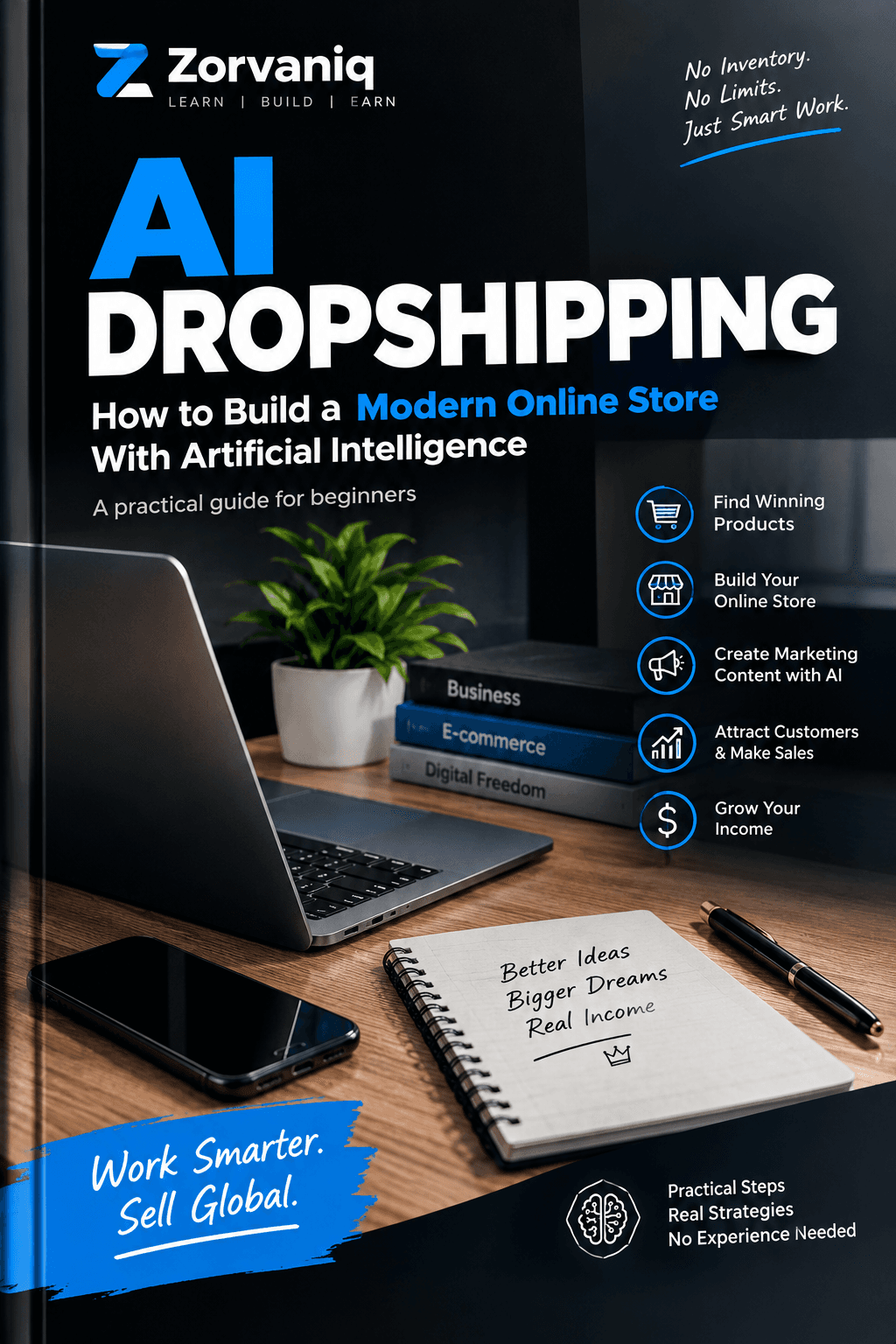
How to Build a Modern Online Store With Artificial Intelligence
Introduction
Dropshipping is an online business model where you sell products without keeping inventory yourself. When a customer places an order, a supplier fulfills the order and ships it to the customer.
Artificial intelligence can make many parts of this process faster—from finding product ideas to writing descriptions, creating marketing content, and analyzing customer feedback.
But AI is a tool, not a guarantee of profit. Your job is to choose useful products, understand your customers, and provide good service.
Chapter 1: Find a Product
Start by looking for products that solve a clear problem or provide useful value.
Good research questions include:
- What are people searching for?
- What problems do customers frequently mention?
- Is the product easy to explain?
- Is it reasonably small and simple to ship?
- Can you sell it at a price that leaves room for expenses and profit?
Use AI to brainstorm ideas, but verify demand and competition yourself.
Example AI prompt:
“Give me 20 dropshipping product ideas for young adults. For each, explain the problem it solves, potential customers, and possible marketing angles.”
Chapter 2: Research Your Market
Before building your store, study similar businesses.
Look at:
- Product prices
- Customer reviews
- Common complaints
- Product photos
- Shipping times
- Frequently asked questions
Customer complaints are especially valuable. They can reveal opportunities to offer better descriptions, clearer communication, or better products.
Chapter 3: Build Your Store
Your store should be simple and trustworthy.
Important pages include:
Home: Explain what your store offers.
Product pages: Show clear photos, price, features, and delivery information.
About: Tell customers who you are and what your store represents.
Contact: Give customers a reliable way to reach you.
Policies: Clearly explain shipping, returns, refunds, and privacy.
AI can help write the first drafts, but always check the information before publishing it.
Chapter 4: Use AI for Marketing
AI can help create:
- Social-media captions
- Product descriptions
- Advertisement ideas
- Short video scripts
- Email campaigns
- Customer-service drafts
For example:
“Create five short TikTok video concepts promoting this product. Make each one focus on a different customer problem.”
Don't simply copy AI-generated content everywhere. Add your own style and real product information.
Chapter 5: Price Carefully
Your selling price must account for more than the supplier's price.
Consider:
Product cost + shipping + payment fees + advertising/marketing costs + other expenses = total cost
Your selling price must be high enough to cover these costs and leave a reasonable margin.
Never assume that a high selling price automatically means high profit.
Chapter 6: Earn Trust
Trust is one of the most important parts of ecommerce.
Be honest about:
- Delivery times
- Product quality
- Refund conditions
- Product limitations
- Additional costs
Never use fake reviews, fake scarcity, or misleading claims.
A customer who trusts your business can become a repeat customer.
Chapter 7: Start Small
You don't need hundreds of products.
Start with a small selection, learn what customers respond to, and improve your store based on real results.
Track:
- Visitors
- Product views
- Orders
- Conversion rate
- Customer questions
- Refunds
- Profit after expenses
Use the data to decide what to improve.
Conclusion
AI has made it easier to start experimenting with ecommerce, but successful dropshipping still requires research, patience, customer service, and responsible business decisions.
Think of AI as your assistant—not your business owner.
Research → Build → Test → Learn → Improve.
Start small, protect your customers, keep learning, and let real results guide your next move.
Customer Reviews
Loading reviews...
Investment
GHS 25.00
Secure payment via paystack