
Ebooks
Poor Waste Management
Creator

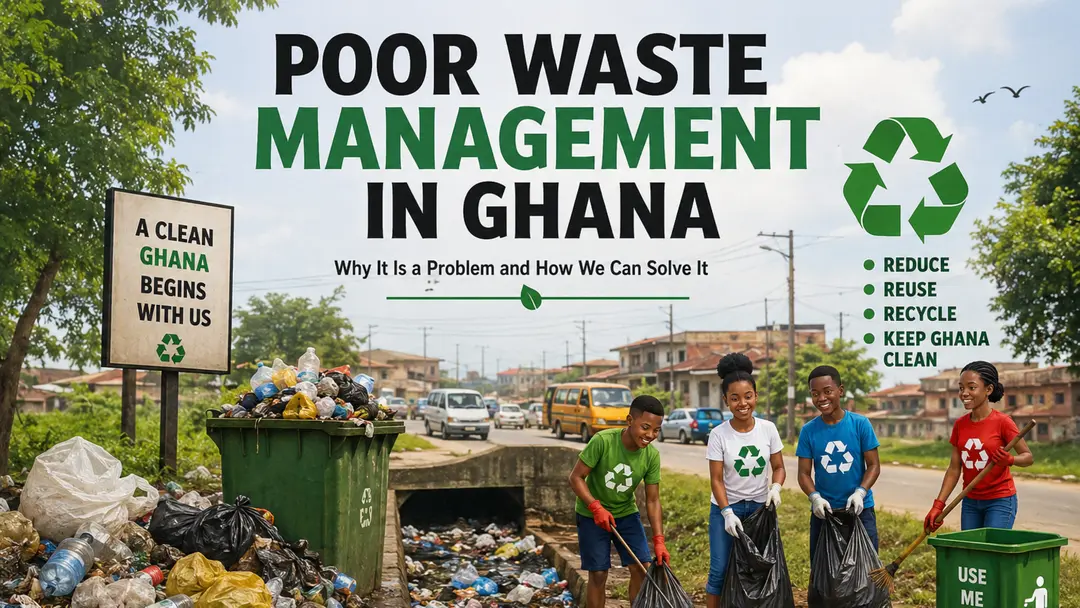
Poor Waste Management in Ghana Why It Is a Problem and How We Can Solve It Table of Contents
- Introduction
- What Is Waste Management?
- Types of Waste
- Causes of Poor Waste Management
- Effects on People and the Environment
- Ways to Solve the Problem
- What Students Can Do
- Conclusion
- Glossary
- References
Chapter 1: Introduction Keeping our surroundings clean is important for our health and for the environment. In Ghana, many communities face problems because waste is not always disposed of properly. Rubbish can be seen on roadsides, in drains, and in open spaces. During the rainy season, blocked drains can lead to flooding, making the problem even worse. Poor waste management affects everyone. It can spread diseases, pollute rivers, and make communities unpleasant to live in. This eBook explains what poor waste management is, why it happens, and what can be done to improve the situation.
Chapter 2: What Is Waste Management? Waste management is the process of collecting, sorting, recycling, treating, and disposing of waste safely. Good waste management keeps communities clean and helps protect people and nature. When waste is dumped on the ground, burned in the open, or left in drains, it becomes poor waste management.
Chapter 3: Types of Waste Organic Waste This includes food leftovers, fruit peels, leaves, and other plant materials. Organic waste can be turned into compost, which helps plants grow. Plastic Waste Examples include water sachets, plastic bottles, shopping bags, and food containers. Plastic does not break down quickly, so it can remain in the environment for many years. Paper Waste This includes newspapers, cardboard boxes, books, and office paper. Paper can often be recycled into new products. Glass Waste Glass bottles and jars can be collected and recycled instead of being thrown away. Metal Waste Metal cans, aluminium, and scrap metal can also be recycled and used again. Electronic Waste Old phones, computers, televisions, and batteries are called electronic waste. They should be disposed of carefully because they may contain harmful materials.
Chapter 4: Causes of Poor Waste Management There are several reasons why waste management is a challenge in Ghana. One reason is rapid population growth. As towns and cities become larger, more waste is produced every day. Another cause is littering. Some people throw rubbish on the ground instead of using waste bins. Some communities also do not have enough bins or regular waste collection services. Because of this, rubbish can build up quickly. Another problem is the limited number of recycling centres. Many items that could be recycled are simply thrown away. Finally, some people are not aware of the importance of keeping the environment clean.
Chapter 5: Effects on People and the Environment Poor waste management has many negative effects. Waste attracts insects and rodents that can spread diseases such as cholera and typhoid. Plastic waste blocks drains, causing floods during heavy rainfall. Burning rubbish produces smoke that pollutes the air and can cause breathing problems. Waste also pollutes rivers and lakes, making the water unsafe for people and animals. Dirty surroundings can discourage visitors and affect local businesses.
Chapter 6: Ways to Solve the Problem There are many ways to improve waste management. People should use waste bins instead of throwing rubbish on the ground. Communities should separate waste into different categories, such as plastic, paper, glass, and organic waste, so that more materials can be recycled. Schools can teach students about keeping the environment clean and recycling. The government and local authorities can provide more bins, improve waste collection services, and enforce sanitation laws. Businesses can reduce plastic packaging and encourage customers to reuse bags and containers. When everyone works together, communities become cleaner and healthier.
Chapter 7: What Students Can Do Students can help by keeping their classrooms and school compound clean. They can avoid littering and encourage friends to do the same. Students can also take part in clean-up exercises and environmental clubs. Simple actions, such as reusing paper, recycling plastic bottles, and picking up litter, can make a big difference. Young people can also educate family members about the importance of proper waste disposal.
Chapter 8: Conclusion Poor waste management is a serious problem, but it is one that can be improved. Everyone has a responsibility to protect the environment. By disposing of waste properly, recycling useful materials, and keeping our surroundings clean, we can help build a healthier and safer Ghana. Small actions taken every day can lead to big improvements in the future.
Glossary Compost: Natural fertilizer made from decayed organic materials. Environment: Everything around us, including land, water, air, plants, and animals. Landfill: A place where waste is buried safely. Polluti
Customer Reviews
Loading reviews...
Investment
GHS 100.00
Secure payment via paystack