
Ebooks
A Midfielders Touch
Creator


A MIDFIELDER’S TOUCH
The Art of Seeing What Others Cannot
By Jeffrey Nana-Otoo Arku
Dedication
To every young footballer who has ever played on a dusty pitch, trained under the burning sun, or walked home after a defeat wondering whether the dream was worth it.
To the midfielders who make others shine, who work when nobody is watching, and who understand that greatness is not always measured by goals.
This book is for you.
Prologue: The Game Within the Game
The stadium was roaring.
Thousands of voices rose into the night, demanding a miracle from eleven men wearing the same colours. The scoreboard read 1–1, and the clock showed eighty-nine minutes.
The ball rolled toward Michael Tuffuor.
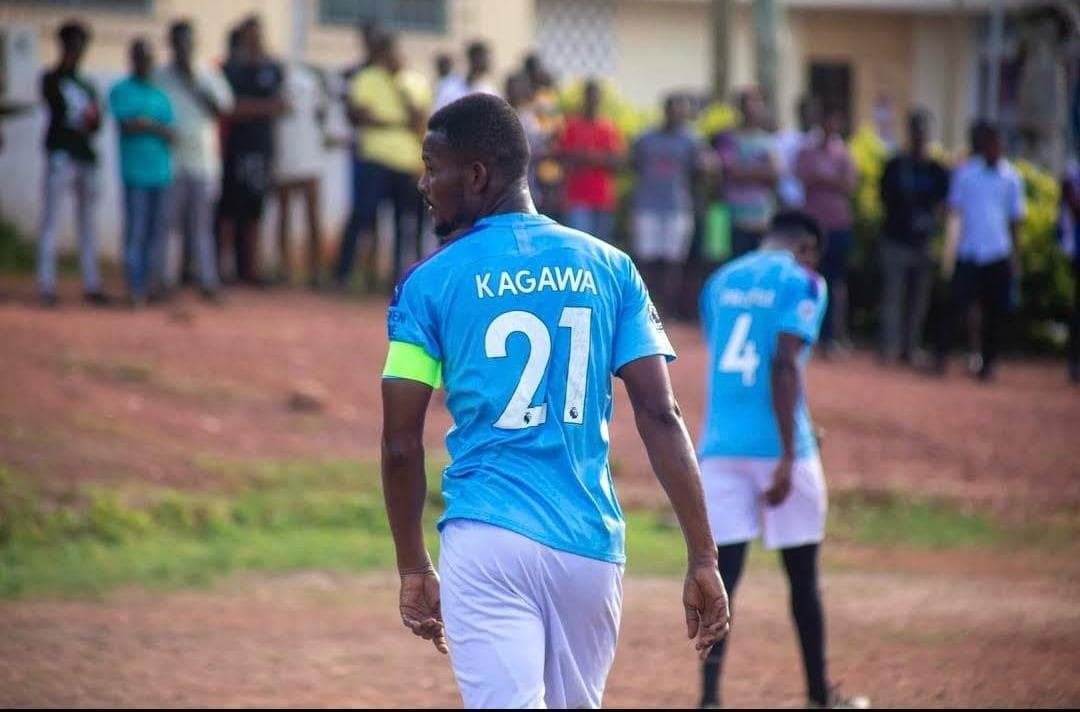
He was eighteen years old, wearing the number 21 shirt. Sweat covered his face, his legs were heavy, and his lungs burned with every breath. Two opponents rushed toward him. A third blocked the obvious passing lane.
The crowd wanted him to shoot.
His striker was shouting for the ball. His winger was sprinting down the left. His captain was pointing toward the penalty area.
For one brief moment, the entire game seemed to slow down.
Tuffuor looked up.
He saw something nobody else had seen.
One defender had taken half a step forward. Another had turned his body toward the winger. Between them was a narrow corridor, open for less than a second.
Tuffuor did not hesitate.
With the inside of his right foot, he slipped the ball through the gap.
It travelled between two defenders and arrived perfectly at the striker’s feet.
One touch.
One finish.
One goal.
The stadium exploded.
His teammates raced toward the goalscorer, who celebrated beneath the floodlights. Tuffuor remained near the centre circle, smiling quietly.
He had not scored the winning goal.
He had created it.
And sometimes, that is the difference between a footballer who plays the game and a midfielder who understands it.
But Tuffuor had not always possessed such vision.
To understand the touch that changed his life, we must return to where his story began.
Chapter One: The Dusty Pitch
Michael Tuffuor grew up in a small community in Ghana, where football was not merely a sport. It was entertainment, friendship, competition, and, for many young boys, a possible escape from poverty.
Every afternoon, after school, the neighbourhood children gathered on a rough patch of ground. The goalposts were made from old wooden sticks, the touchlines were imaginary, and the ball was often so worn that its original colour had disappeared.
Nobody cared.
Once the first kick was taken, the whole world became a football pitch.
Tuffuor was not the strongest boy in the neighbourhood. He was not the fastest, and he could not kick the ball as far as the older boys. When he first joined their games, he spent more time chasing the ball than controlling it.
His friends called him slow.
“You think too much!” Kofi, the strongest boy on the pitch, shouted one afternoon. “Football is about running and scoring. Stop standing there!”
Tuffuor said nothing.
He simply watched.
He watched how Kofi always moved toward the ball before it arrived. He noticed that the defenders followed the player who appeared most dangerous. He observed that whenever two players chased the same opponent, another player was left unmarked.
Tuffuor began to understand that football contained patterns.
The game was not random. It was a series of decisions, movements, mistakes, and opportunities.
One evening, after losing another match, Tuffour remained on the pitch while the others went home.
He placed the ball at his feet and began practising.
He passed it against a wall and received it with his right foot. Then his left. He turned his body before the ball arrived. He practised looking over his shoulder before receiving a pass.
Again and again…he repeated the same movements.
His father found him there after sunset.
“Why are you still here?” he asked.
“I want to become a better player.”
His father looked at the dusty ground, then at the boy’s tired face.
“Then do not only practise what your friends can see,” he said. “Practise what they cannot see.”
Tuffuor frowned.
“What does that mean?” “Anyone can see a powerful shot. Anyone can see a fast run. But can you see the pass before it becomes available? Can you know where the ball should go before it reaches you?” Tuffuor looked down at the ball. That night, he began to think differently. He no longer wanted merely to touch the ball more often. He wanted every touch to mean something.
Chapter Two: Learning to Look
At thirteen, Tuffour joined a local youth team.
His coach, Mr. Boateng, was a former midfielder whose professional career had ended before he reached the highest level. His knees had weakened, but his understanding of football remained sharp.
During Tuffours first training session, the coach watched him closely.
Tuffuor could pass accurately over short distances. He was comfortable on the ball and rarely panicked.
Customer Reviews
Loading reviews...
Investment
Secure payment via paystack