
Ebooks
Health Care Challenges
Creator

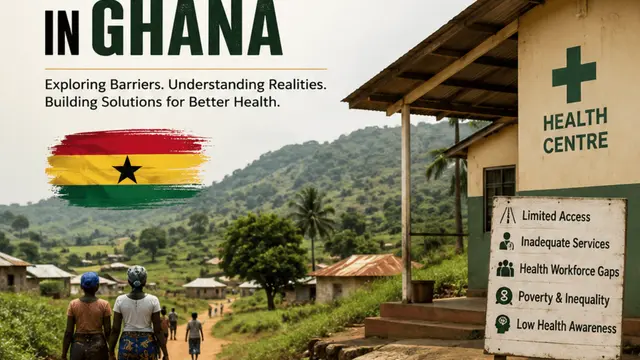
HEALTHCARE CHALLENGES IN RURAL COMMUNITIES
A Comprehensive Analysis of Access, Personnel, Equipment, and Medicine Shortages 2026 Edition Health Policy & Community Welfare Series
TABLE OF CONTENTS
01 Introduction Overview of the rural healthcare crisis .................
02 Access to Quality Healthcare Barriers, geography, and economic factors .................
03 Shortage of Medical Personnel The human resource crisis in rural health .................
04 Equipment & Infrastructure Gaps The medical technology divide .................
05 Medicine & Supply Chain Failures Drug shortages and their consequences .................
06 Interconnected Challenges How problems compound each other .................
07 Strategic Solutions & Recommendations Pathways to better rural health .................
08 Conclusion A call to action .................
01 Introduction Understanding the Rural Healthcare Crisis Access to quality healthcare is a fundamental human right, yet millions of people living in rural and remote communities around the world are routinely denied this right due to a complex web of geographical, economic, and systemic barriers. The health of a population is not merely a medical matter — it is a reflection of governance, infrastructure investment, and social equity. This ebook provides a thorough examination of the two core challenges that define the rural healthcare crisis: limited access to quality healthcare services, and critical shortages of the medical personnel, equipment, and medicines required to deliver those services.
GLOBAL CONTEXT Globally, over 50% of the world's population lives in rural areas, yet these communities are served by fewer than 25% of the world's physicians. This disparity grows more acute each year.
Rural healthcare challenges are rarely isolated problems. They form an interconnected system of deficiencies that reinforce one another. A shortage of doctors drives patients to seek care in distant urban centers; the absence of proper equipment means even available clinicians cannot deliver effective care; and when medicines are unavailable or unaffordable, even diagnosed patients cannot recover. Understanding these dynamics is the first step toward meaningful reform. This publication draws on public health research, policy analyses, and community health data to present not just the problems, but actionable strategies for governments, health authorities, NGOs, and communities to address them.
50%+ World population in rural areas <25% Physicians serving rural areas 3–5× Higher mortality risk vs urban peers
02 Access to Quality Healthcare Barriers Facing Rural Communities The Geography of Healthcare Exclusion For rural residents, accessing a hospital or clinic is often not a matter of minutes but of hours — sometimes requiring full-day journeys on poor roads, or crossing rivers and forests without reliable transport. This geographical isolation is one of the most significant barriers to healthcare access worldwide. In many low- and middle-income countries, health facilities are heavily concentrated in urban centers. A rural patient needing specialized care for cancer, cardiac conditions, or serious trauma may need to travel hundreds of kilometers. For the elderly, women in labour, and young children, this distance can be fatal.
RESEARCH FINDING Studies show that for every additional 10 km distance from a health facility, healthcare utilization drops by 10–40%, depending on road conditions, transportation options, and income levels.
Economic Barriers to Access Even when healthcare facilities exist within reachable distance, the cost of care remains a prohibitive barrier for many rural residents. Rural populations are disproportionately represented among the poor and are more likely to rely on subsistence farming or informal labor — leaving them with little disposable income for health services. Out-of-pocket payments for consultations, diagnostics, medicines, and transportation can easily consume a month's income. Faced with this reality, many rural households delay or forgo care entirely, allowing conditions to worsen until they become emergencies. Cultural and Social Barriers Beyond geography and economics, cultural factors shape healthcare-seeking behaviour in rural communities. Traditional beliefs, distrust of formal medical systems, language barriers between patients and providers, and gender norms that prevent women from seeking care independently all contribute to under-utilisation of available services. Health literacy — the ability to understand and act on health information — is often lower in rural communities due to lower educational attainment. This affects communities' ability to recognize symptoms, navigate healthcare systems, and adhere to treatment protocols. Infrastructure and Facility Quality Even when rural facilities exist, they are frequently inadequate. Clinics may lack electricit
Customer Reviews
Loading reviews...
Investment
Secure payment via paystack