
Ebooks
We Kept Falling in Love in the Wrong Timelines
Creator

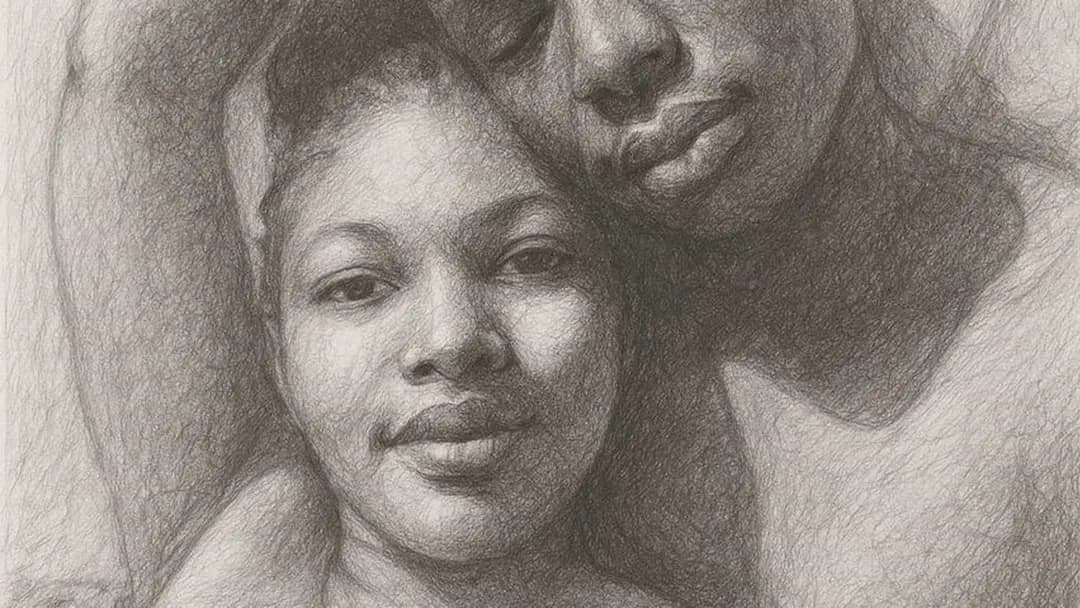
We Kept Falling in Love in the Wrong Timelines
The Hospice The first time Mira Osei met Theo, he was dying. She was nineteen then, a psychology student volunteering three evenings a week at Willow brook Hospice because her professor had said something about proximity to death teaching you more about life than any textbook could. She had expected the work to be grim. Instead, she found it quiet, almost tender — old hands gripping hers, old stories spilling out of people who no longer had any reason to hold them in.Theo was eighty-three, a widower with a shock of white hair and eyes the color of weak tea. He had no visitors that she ever saw. On her second week, she sat beside his bed reading aloud from a paperback someone had left in the common room, and he opened his eyes and looked at her as if she had returned from somewhere very far away.
"Eleanor," he said. "You came back." She corrected him gently — I'm Mira but he only smiled, the way people smile at a joke only they understand and asked if she remembered the lake house. The green dress. The way she used to laugh with her whole body, head thrown back, like laughing, was a physical task she took seriously. She didn't correct him again. It seemed unkind, and besides, there was no harm in being someone's Eleanor for an hour.He died on a Tuesday in March, and she found out only because his name disappeared from the whiteboard where the staff tracked their patients. No obituary that she could find. No family that came to collect his things. She kept a small brass compass that had sat on his nightstand, because nobody else wanted it, and because some part of her — the part that hadn't studied enough psychology yet to talk herself out of feeling things — believed it wanted to be kept. She told herself, eventually, that it was nothing. A dying brain, reaching for whoever was nearest. She graduated. She moved to Boston, then to Lisbon for a fellowship. She stopped thinking about the old man with the compass, mostly.
The Coffee Shop The second time, she was thirty-four, and he was twenty-two. She was writing her first book in a café near the Alfama district, the kind of place with mismatched chairs and a cat that slept in the window, when a young man reaching for the sugar knocked her elbow and sent coffee sliding across her manuscript. He apologized in English roughened by a Portuguese accent, grabbing napkins, blotting at pages that were, thankfully, backed up on a laptop somewhere. "Let me buy you another one," he said. "Please. I am very sorry. I am not usually this — " he gestured vaguely, searching for the word, " — catastrophic." She said yes before she'd decided to. His name was Teodoro, though everyone called him Theo. He was finishing an architecture degree and moonlighting as a tour guide, and he talked with his hands in a way that made the whole café feel like it was tilting gently toward him. They stayed for six hours. The cat relocated itself to Theo's lap around hour three and refused to leave, which he seemed to take as a personal victory.
Somewhere in hour five, he mentioned — offhand, laughing at himself — that he'd had the same recurring dream since childhood. A lake house he'd never visited. A woman in a green dress. A name that didn't belong to anyone he knew: Eleanor.
Mira's coffee cup stopped halfway to her mouth. She didn't tell him about the hospice. She told herself it was a common enough name, a common enough dream — lake houses were the wallpaper of everyone's subconscious. But that night she dreamed of the dock again, of hands younger than they should have been teaching hers to skip stones across water the color of hammered tin. They dated for four months. It was easy in the way only temporary things are easy — no furniture to argue over, no five-year plan to reconcile. He was twenty-two and standing at the very beginning of a life. She was thirty-four and already halfway through building one. When it ended, it ended without cruelty, the way a season ends. He moved to Porto for a job. She finished her book. She named a minor character Eleanor, and told no one why, and did not examine the impulse too closely.
. The Recital
The third time, she was sixty-one. Her husband, Kwame, had been dead two years by then — long enough that grief had stopped being a weather system and become more like a scar, present but no longer weeping. She was sitting in the third row of a school auditorium, waiting for her granddaughter to butcher a Chopin nocturne with the specific confidence of a ten-year-old who has practiced exactly enough to feel ready and not nearly enough to actually be ready, when a man lowered himself into the seat beside her with the careful, deliberate movements of someone whose knees had opinions about sitting.
"Is this taken?" he asked, though he was already sitting.
"Apparently not," she said. He introduced himself as Teodoro — "friends call me Theo, but at this age, who has the energy for extra syllables" — and s
Customer Reviews
Loading reviews...
Investment
Secure payment via paystack